

What if the Salt Lake Temple was telling a story before you ever stepped inside? The Salt Lake Temple stands proudly in the heart of Salt Lake City and is one of America’s most recognizable landmarks. Its striking granite exterior, soaring towers, intricate stonework and remarkable architectural details make it a masterpiece worth exploring. But look a little closer, and you’ll discover something even more fascinating: nearly every detail has a story to tell.
The Salt Lake Temple symbols reflect deeply held beliefs about faith, eternity, the heavens, family and humanity’s relationship with God. From the Big Dipper carved into its western tower to the All-Seeing Eye watching over the building, these details offer a fascinating glimpse into the beliefs and vision behind its construction. Whether you’re interested in religious history, architectural design or simply discovering the stories behind extraordinary places, understanding the symbolism of the Salt Lake Temple makes a visit all the more meaningful.
Let’s explore some of its most fascinating symbols and the stories they represent.
A Brief History of the Salt Lake Temple
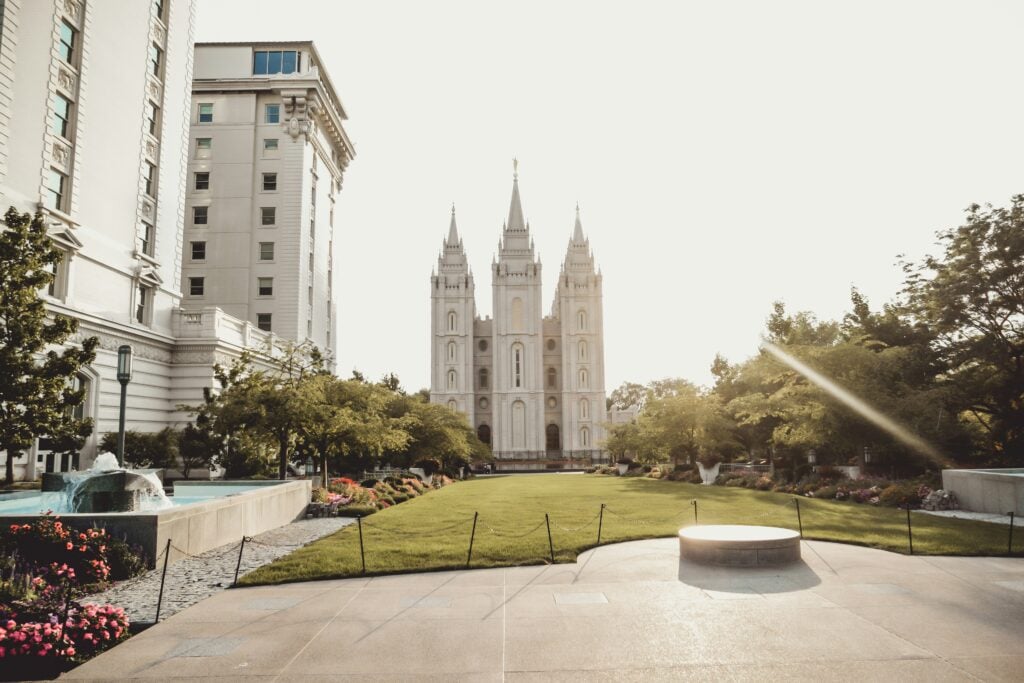
The construction of the Salt Lake Temple began on April 6, 1853, under the direction of Brigham Young, the second president of The Church of Jesus Christ of Latter-day Saints. The temple was also designed by architect Truman O. Angell, and the monumental project took 40 years to complete. The temple was officially dedicated in April 1893, becoming a defining landmark of Salt Lake City and an enduring symbol of the faith, determination and craftsmanship of the early pioneers.
The temple was built from granite quarried in nearby Little Cottonwood Canyon and features six impressive spires and hundreds of carefully crafted architectural details. However, its beauty goes far beyond its size and construction. The exterior was intentionally designed with religious symbolism woven throughout its stonework. These symbols communicate ideas about God’s creations, spiritual guidance, eternal relationships and the connection between heaven and earth.
Ever wondering what the inside of the Salt Lake Temple looks like? Join us on our special Salt Lake City Temple Tour Experience.
1. The Big Dipper: A Symbol of Spiritual Guidance

One of the most recognizable and fascinating examples of Salt Lake Temple exterior symbolism is the Big Dipper constellation. If you look toward the western central tower, you’ll find seven stars representing Ursa Major, commonly known as the Big Dipper. The constellation is positioned to point toward the North Star, which has historically served as a reliable navigational reference for travelers.
But why would a constellation appear on a temple? According to historical accounts of the temple’s design, architect Truman O. Angell explained that the Big Dipper was intended to remind people that those who are lost can find their way through the guidance of the priesthood. The symbolism is particularly meaningful because the stars have long represented direction, hope and the ability to find one’s way through darkness. Just as travelers once looked to the stars to navigate unfamiliar landscapes, the constellation serves as a reminder of the importance of spiritual direction throughout life’s journey.
2. The All-Seeing Eye: A Reminder of God’s Presence
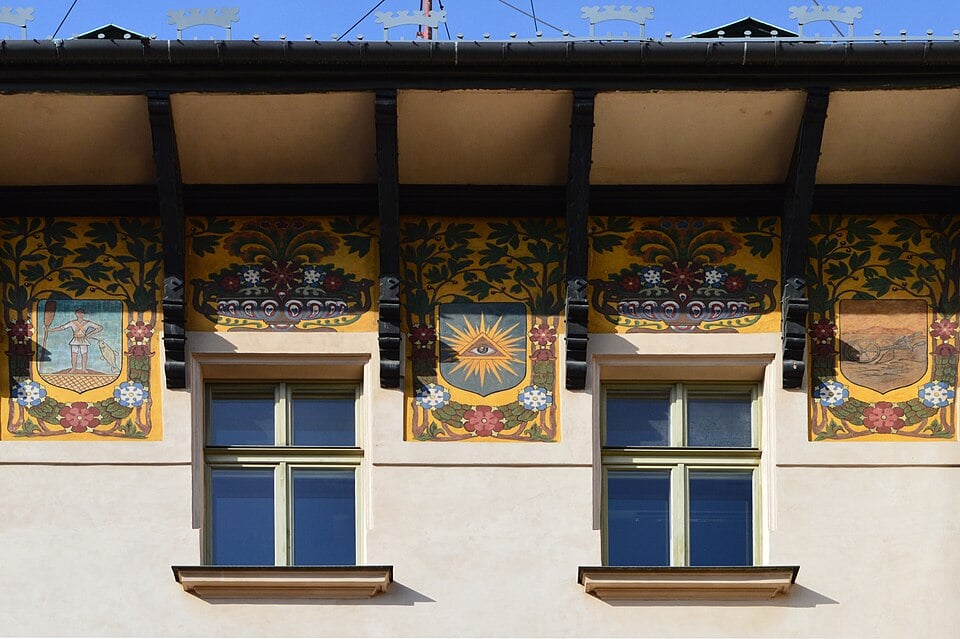
Another interesting feature of the Salt Lake Temple is the All-Seeing Eye. It is located above the second window on the east and west central towers, and this carved symbol depicts an eye surrounded by rays of light and positioned beneath a decorative veil. The All-Seeing Eye represents God’s watchful presence, protection and awareness of humanity.
Its meaning is also closely associated with biblical passages, including Proverbs 15:3, which teaches that the eyes of the Lord are everywhere, observing both good and evil. For early Latter-day Saints, this symbol served as a reminder that God was always present and aware of their actions, intentions, and choices. The placement of the eye beneath a veil adds another layer of meaning. In religious symbolism, a veil often represents the separation between the earthly and divine worlds.
3. The Sun, Moon, and Stars: A Symbolic Journey Through the Heavens
One of the most beautiful aspects of Salt Lake Temple symbolism is the use of celestial imagery throughout its exterior. As you look from the lower sections of the building toward its towering spires, you’ll notice a progression of carved stones representing the earth, moon, sun and stars.
- Earth Stones: They are located near the base of the temple and feature representations of the globe. They symbolize the earth and the worldwide reach of the gospel.
- Moon Stones: Above the earth stones are moon stones depicting different phases of the moon. These changing shapes represent the lunar cycle and are associated with ideas of time, progression and different degrees of heavenly glory.
- Sun Stones: Sun stones can be found higher on the building and represent the sun and its light. They can be understood as symbols of divine illumination, truth and the life-giving power of God’s creations.
- Star Stones: Star stones found near the top of the temple draw the eye toward the heavens. They represent the celestial world and the vastness of God’s creations.
Together, these symbols create a visual journey from the earth toward the heavens. They also reflect a central theme of Latter-day Saint belief: that earthly life is connected to something much greater and that spiritual progression is an essential part of the human experience.
4. The Holy of Holies: A Place of Sacred Reverence
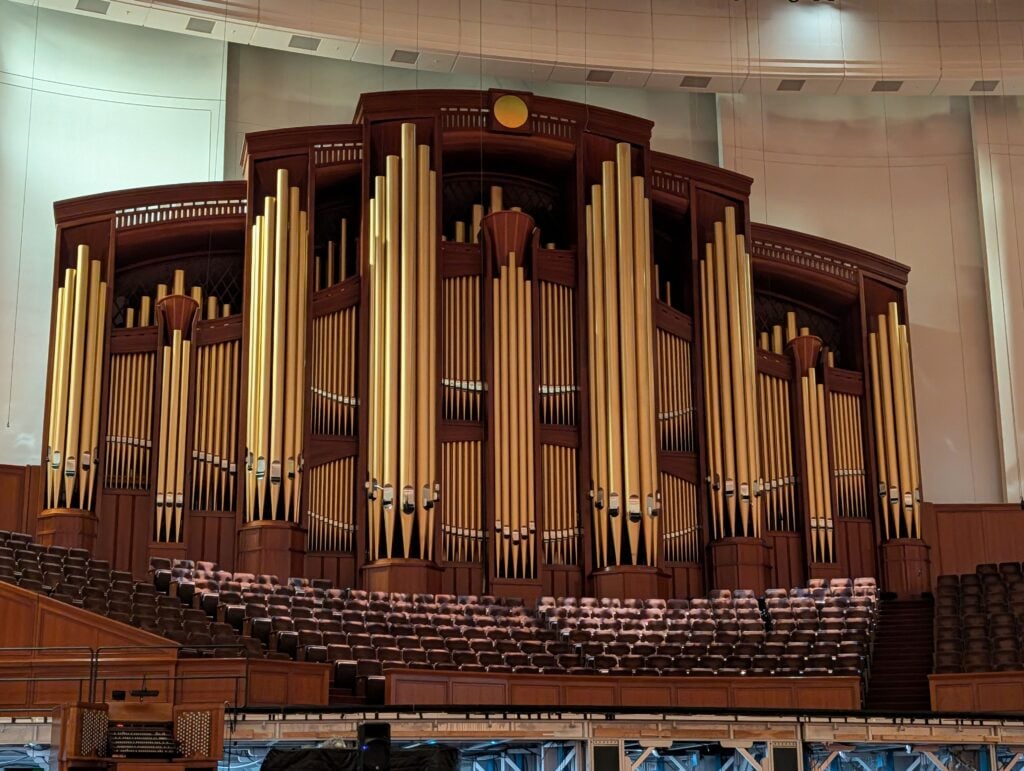
While the exterior symbols are fascinating, some of the most meaningful aspects of the Salt Lake Temple’s symbolism are found within its walls. One particularly significant space is the Holy of Holies. The term originates in ancient biblical temple traditions and refers to the most sacred area of a temple. In the Salt Lake Temple, the Holy of Holies is a special room associated with prayer, revelation, and communion with God.
Historically, this room has held particular significance as a place for sacred reflection and prayer by Church leaders. Its meaning is connected to the idea of entering into the presence of God. It represents the ultimate spiritual aspiration of temple worship: drawing closer to the divine. The Holy of Holies also helps us understand why the temple was designed with such careful attention to sacred spaces. Every element, from its exterior architecture to its interior rooms, contributes to an atmosphere of reverence and spiritual purpose.
5. The Sealing Room: A Symbol of Eternal Family Connections
Another important feature of the Salt Lake Temple is its sealing rooms. The temple contains four sealing rooms, where Latter-day Saints participate in sacred marriage and family sealing ordinances. In the beliefs of The Church of Jesus Christ of Latter-day Saints, these ordinances represent the possibility of family relationships continuing beyond this earthly life.
The idea of eternal families is central to the faith, and the sealing rooms provide a physical setting for these deeply meaningful ceremonies. Unlike a traditional wedding venue, a temple sealing room is designed around sacred covenants and the belief that marriage and family relationships can extend into eternity.
6. The Towers and Spires: Reaching Toward Heaven
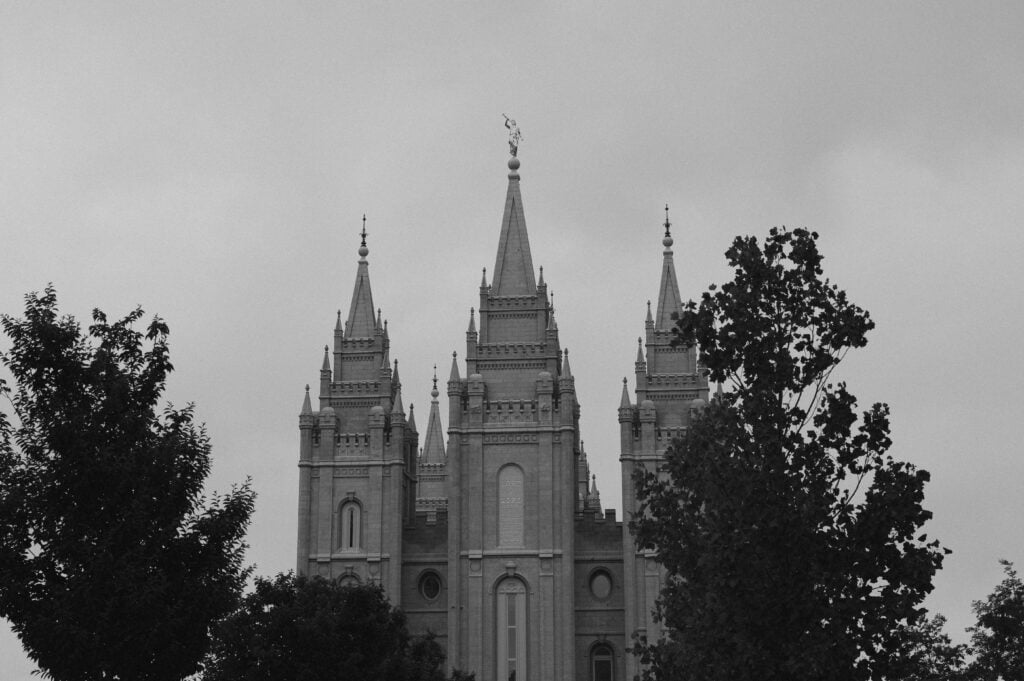
It’s impossible to overlook the six magnificent towers that distinguish the Salt Lake Temple’s silhouette. However, their design is about more than creating an impressive skyline. The eastern towers represent the Melchizedek Priesthood, while the western towers represent the Aaronic Priesthood. The three towers at each end also reflect the leadership structure associated with these priesthoods.
Their ascending height and numerous spires draw the eye upward, reinforcing the temple’s connection with heaven.The tallest eastern spire reaches approximately 210 feet and is topped by a gilded statue of the angel Moroni, a figure associated with the restoration of the gospel in Latter-day Saint belief. Together, the towers create a striking architectural statement about faith, spiritual authority and the aspiration to draw closer to God.
Experience the Salt Lake Temple With Travel Deliciously
So rather than functioning as isolated decorative details, these symbols contribute to a much larger story. They reflect the beliefs, hopes and dedication of the pioneers who spent four decades bringing this extraordinary building to life. Even if you aren’t familiar with Latter-day Saint beliefs, the Salt Lake Temple offers a fascinating opportunity to appreciate how architecture can communicate history, culture, and spirituality. And once you understand what you’re looking at, you’ll never see its exterior quite the same way again.
When you read about the Salt Lake Temple’s history and symbolism, it’s fascinating, but imagine experiencing this extraordinary landmark in person. In 2027, the newly renovated Salt Lake Temple will open to the public for a special, limited-time Open House. This is an extraordinary opportunity to experience its remarkable architecture, craftsmanship, murals and sacred spaces following decades of history and years of renovation.
Ready to discover the Salt Lake Temple for yourself?
Explore the Salt Lake Temple with Travel Deliciously! Reserve your place on this unforgettable trip today.
You Might Also Like
The Most Spiritual Places in the US: 10 Sacred Destinations That Will Inspire You
Hidden Gem Restaurants in Salt Lake City: 10 Local Favorites Worth Discovering